
Radha and Krishna: The Erotic Path to God
He is blue as twilight. She is golden as turmeric and longing.
Radha and Krishna. The greatest love story India ever told. Still sung in villages, still painted on temple walls, still wept over by devotees who find in their divine romance a mirror for their own souls' yearning.
But this is not just poetry. This is theology.
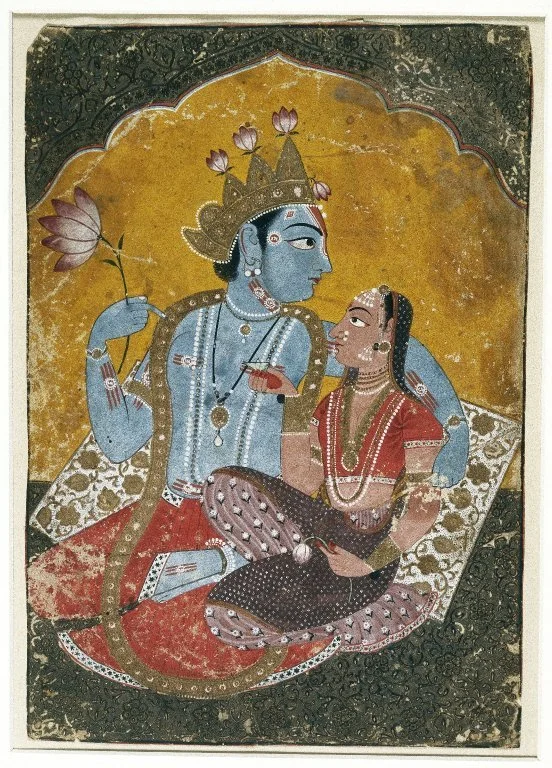
Who They Are
Krishna is the Supreme—the divine playing in human form, calling souls home with the irresistible music of his flute. He is the Beloved that every heart secretly seeks, wearing the disguise of every lesser love we chase. When you fall in love with another person and feel that transcendent ache, the Bhakti poets would say: you are rehearsing. You are practicing for the real thing. You are feeling the edge of what it would be like to fall into God.
And Radha? She is the human soul—the jiva—in her purest state of longing. She wants nothing but union. She is consumed by love. She leaves her husband in the night, runs through the forest, finds Krishna in the moonlight, and their union is described in verse after verse of unabashed eroticism that has made Brahmin priests uncomfortable for centuries.
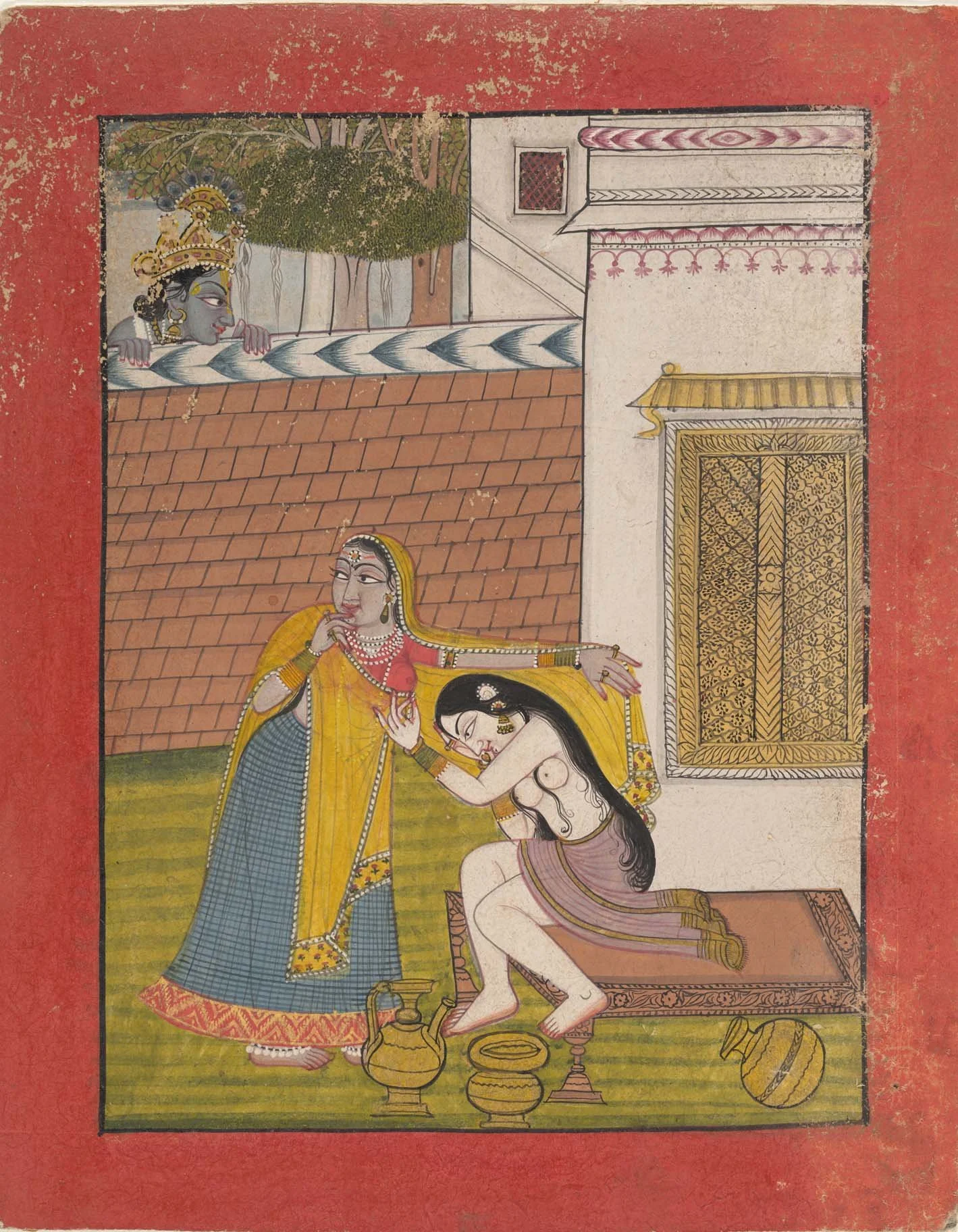
The Poetry That Does Not Flinch
The Gitagovinda of Jayadeva, the songs of Chandidas, the verses of Vidyapati—this is sacred scripture that reads like erotic poetry. Because that's what it is. Both at once.
Radha and Krishna make love in secret groves while the world sleeps. Their bodies intertwine. Their fluids mingle. He undoes her hair; she scratches his back. It is explicit, ecstatic, and considered holy.
Why?
Because the Bhakti Tantrikas understood something radical: your longing for a beloved is a rehearsal for your longing for the Divine.
The desire that burns in your body is Shakti herself, reaching toward union. The ache you feel when you want someone—that hollowness, that reaching, that sweet unbearable want—is the same force that pulls the soul toward God.
The Teaching
You do not transcend desire by killing it.
You follow it home.
The path of Bhakti—devotional love—does not ask you to renounce your passionate nature. It asks you to aim it. To recognize that every love affair is a doorway, every beloved a face of the Beloved.
Let your longing be so complete, so consuming, so total—that it burns through every barrier between you and the One you actually seek.
The human beloved is not a distraction from God. The human beloved is a training ground. A gymnasium for the heart. A place where you learn the moves you'll need when the real Beloved finally takes the floor.
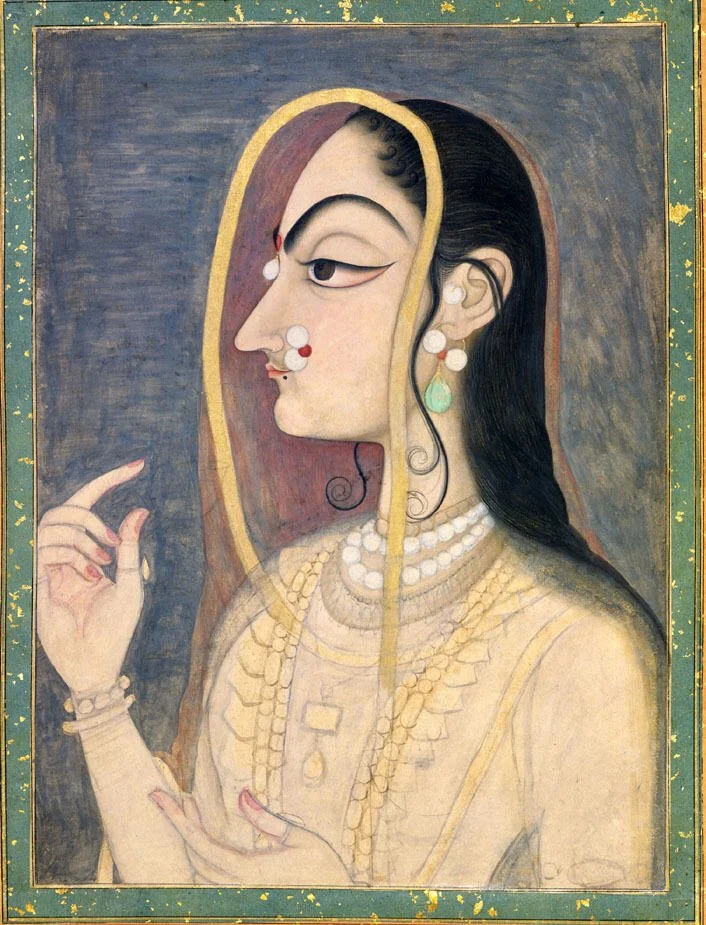
Radha, beloved of Krishna
What Radha Became
Radha never became a renunciate.
She did not shave her head and move to an ashram. She did not transcend her desire through austerities and negation. She did not become less of what she was.
She became love itself.
Her longing was so pure, so total, so undefended that it burned away everything that was not love. Not by suppression. By completion. By following the thread of desire so far that she arrived at its source.
This is the Bhakti path. The erotic path. The path that does not ask you to be less human to become more divine.
It asks you to be so human, so fully in your wanting, so completely surrendered to love—that you fall through the bottom of human love into something infinite.
For You
Your longing is not a problem to be solved.
Your desire is not an obstacle to spiritual growth.
The ache you feel—for union, for connection, for that person who makes your heart go soft and your breath go shallow—is the doorway, not the distraction.
Follow it. Not blindly, not unconsciously—but with the recognition that every beloved you reach for is a face of the Beloved reaching back.
Krishna is calling from every pair of eyes you've ever loved.
And Radha? She is the part of you that is brave enough to answer.
॥ राधे कृष्ण ॥
Sources & Further Reading
Miller, Barbara Stoler, trans. Love Song of the Dark Lord: Jayadeva's Gitagovinda. Columbia University Press, 1977.
Hawley, John Stratton. Sur's Ocean: Poems from the Early Tradition. Harvard University Press, 2015.
Haberman, David L. Acting as a Way of Salvation: A Study of Raganuga Bhakti Sadhana. Oxford University Press, 1988.
