
When Sex Was Prayer
The Sacred Marriage and the World's Oldest Love Story
Before sex was sin, it was sacrament.
Before the body was shameful, it was an altar.
Before desire was diagnosed as a problem requiring management, medication, or confession—it was understood as the very force that keeps worlds spinning.
If that sentence just short-circuited something in your nervous system, good. It was supposed to. We've been running on corrupted software for a few thousand years, and occasionally the system needs a hard reboot.
The ancients had a name for what we've forgotten: Hieros Gamos. Greek for 'Sacred Marriage.' And it was not a metaphor. It was not poetry (though there was plenty of that). It was a real technology of sorts—a ritual practice for keeping the cosmos in balance, the land fertile, and the veil between human and divine thin enough to whisper through.
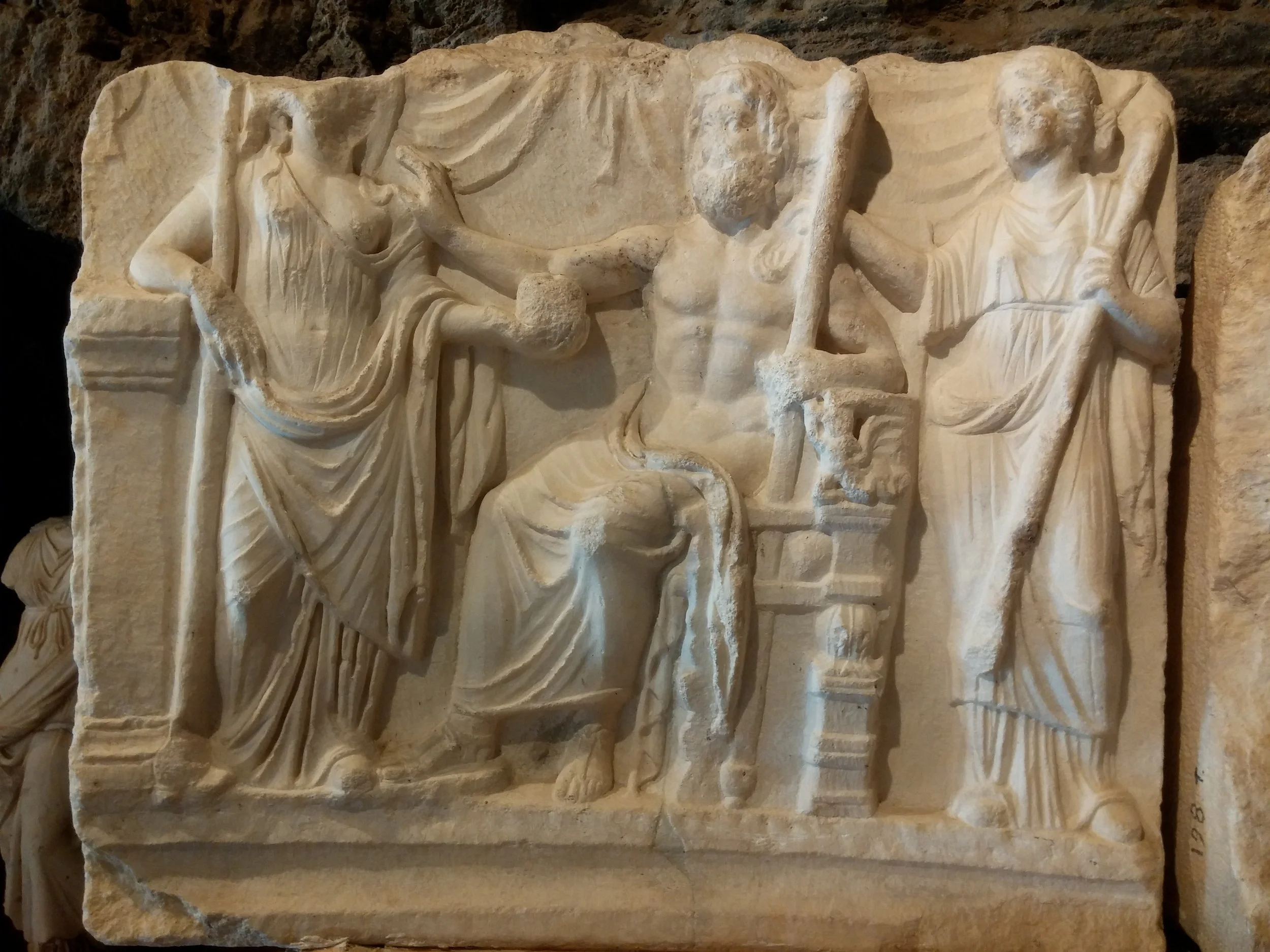
What Exactly Is Hieros Gamos?
The Hieros Gamos was a ritual union—between goddess and god, between priestess and king, between heaven and earth—performed in temples across the ancient world. And when we say 'performed,' we mean it in the fullest sense. This was not a play where actors pretended to unite while the audience politely looked elsewhere. This was flesh meeting flesh, witnessed by communities, celebrated as the holiest act a human body could offer.
Yes, really.
When the sacred marriage was enacted—when a priestess who had invoked the goddess into her body joined with a king who had invoked the god—the consequences were understood to be cosmic. Rivers would rise. Crops would grow. Wombs would quicken. The granaries would fill. The people would prosper. The veil between mortal and divine would grow thin enough for the gods themselves to walk through.
This was not wishful thinking or sympathetic magic in the disparaging modern sense. To these cultures, the connection between sexual union and earthly fertility was as obvious as the connection between rain and rivers. Of course the land responds to how we love. The earth is alive. The cosmos is relational. Everything is connected to everything else. How could the foundational creative act not ripple outward?
The Oldest Love Story: Inanna and Dumuzi
Four thousand years ago, in the land between two rivers—Mesopotamia, the Tigris-Euphrates basin, modern-day Iraq—a goddess descended from heaven.
Her name was Inanna. Queen of Heaven. Lady of the Morning Star. Goddess of love, war, fertility, and infinite desire. She was not a tame deity. She was not a gentle mother goddess content to nurture from the shadows. Inanna was want personified—the force that moves toward union, that refuses stagnation, that demands life be lived.
And she chose a shepherd.
Dumuzi. Mortal. Beautiful. Willing.
Their courtship is recorded in Sumerian tablets that represent the oldest love poetry in human history—and if your English Lit class gave you the impression that ancient literature was all stiff and formal, prepare to have that notion pleasurably annihilated.
Inanna speaks of her vulva as 'the boat of heaven,' 'the new crescent moon,' 'fallow land that needs plowing.' She calls out to Dumuzi:
'Plow my field. Water my garden.
Fill me with your flood.'
And he comes to her (and in her ;) ).
This was not a scandal in ancient Sumer. This was state religion.
Each year, the king of Sumer would ritually become Dumuzi. A high priestess—trained in the sacred arts, initiated into the mysteries—would embody Inanna. And in the temple, on a sacred bed prepared with cedar and rare herbs, they would unite while the entire kingdom watched and waited.
Why watch and wait? Because the prosperity of the civilization depended on this union. The king derived his legitimacy not from military conquest or inherited bloodline alone, but from his capacity to please the goddess. If Inanna's body was honored, the land would bloom. If her pleasure was full, the rivers would swell. If the Sacred Marriage was performed with skill and devotion, the year ahead would bring abundance.
Can you imagine a civilization that placed feminine pleasure at the center of its power structure?
It existed. For thousands of years.
☽ ◯ ☾
Sources & Further Reading
Wolkstein, Diane & Samuel Noah Kramer. Inanna: Queen of Heaven and Earth. Harper & Row, 1983.
Lapinkivi, Pirjo. The Sumerian Sacred Marriage in the Light of Comparative Evidence. State Archives of Assyria Studies XV, 2004.
Frymer-Kensky, Tikva. In the Wake of the Goddesses: Women, Culture, and the Biblical Transformation of Pagan Myth. Free Press, 1992.
